If you read this blog regularly, you will know that I love late-night television. The late-night talk show genre is one of my favorites; I love its history, style, and sensibilities. Today, most audiences find the conventions of traditional late-night talk shows dated or disingenuous, and the genre is experiencing a serious decline in popularity. While I do appreciate many of these same conventions, I have also always gravitated towards hosts like David Letterman and Conan O’Brien, who have a long history of subverting the genre in a self-aware, self-deprecating way. Another host who followed that self-aware tradition was Craig Ferguson. Craig Ferguson was the host of CBS’s The Late Late Show, which aired every night at 12:30 A.M. following Letterman’s The Late Show. Ferguson’s show instantly stood apart due to the host’s improvisational style and a deconstructive approach to the genre, similar to what Letterman did in the 1980s and what Conan did in the 90s and 2000s. This blog will follow the history of Craig Ferguson and his time on the show, and explain why Craig Ferguson is the most underrated late-night talk show host of all time.
Craig Ferguson is a Scottish comedian originally born in Glasgow. In his youth, he performed as a punk musician before pursuing acting and stand-up comedy. He struggled with alcoholism and substance abuse problems in his youth; his experience as an addict would later become a frequent theme in his comedy and on his show. He moved to Los Angeles in the 1990s and had his first major breakout role in the popular sitcom The Drew Carey Show. Ferguson portrayed Drew’s boss, Mr. Wick, and spoke with a British accent, a parody of all the British actors who have portrayed Scottish characters, with Ferguson jokingly saying that he was getting “revenge” for James Doohan’s portrayal of Scotty on Star Trek. Ferguson was a main cast member for most of the show’s run, and his character, Mr. Wick, became a fan favorite. During this time, Ferguson wrote and directed movies and even won the Audience Award for Best Film at various film festivals for his 2003 film I’ll Be There. In 2004, Craig Kilborn announced that he would be stepping down as host of The Late Late Show, and Ferguson was announced as his replacement, with his first show airing on January 3, 2005.
When Ferguson’s show first aired, it was clear that his iteration of The Late Late Show would be different from other late-night talk shows. The show’s budget was noticeably smaller than that of other late-night shows. There was no live band, and the studio was very plain-looking and dimly lit. Ferguson was a true underdog in late-night. He was aware that a Scottish comedian, hosting a small-budget show at 12:30 A.M., likely would not bring in a large audience. Ferguson used this to his advantage, hosting the type of show he wanted to do and, most importantly, the type of show he wanted to watch. It was a complete deconstruction of the late-night genre. Ferguson’s show featured puppets and sketches that included original characters or deliberately bad celebrity impressions, such as his “impression” of Larry King. Ferguson’s show had a decidedly playful and silly tone, even more unconventional than that of Letterman and Conan.
Episodes of The Late Late Show began with a cold open, usually an opening skit, often featuring Ferguson alongside various puppets. After the cold open, a theme song performed by Ferguson would then play, as the show did not feature a live band. Ferguson would then perform his opening monologue. For most late-night talk shows, the monologue is one of the most heavily polished parts of the show, often featuring about 10 topical jokes, with brief ad-libbing between the host and the sidekick. Ferguson realized early in the show’s run that his ad-libs were getting bigger laughs than most of the pre-written monologue jokes. Ferguson then started improvising his entire monologues. Often, his monologues still consisted of topical humor, usually with Ferguson referencing something in the news and improvising a monologue to build on it. His monologues also frequently featured humor derived from his own personal experiences. On more than a few occasions, Ferguson used his nightly monologue to discuss serious or personal matters. He paid tribute to both his parents when they passed, dedicating those monologues to remembering them and talking about their lives. He would also discuss his struggles as a recovering alcoholic. One of his most famous monologues was in 2007, when he announced at the start that there would be “no Britney Spears jokes” during Spears’s highly publicized personal crisis. While the monologue was still humorous, Ferguson explained his position, stating that he did not feel comfortable making fun of Britney Spears due to his past struggles with substance abuse, as well as the ethics of making fun of someone who is going through a traumatic experience, admitting his regret for certain jokes he had made in the past. He felt very strongly that comedy should be used to make fun of powerful people, not to punch down on vulnerable people. A lesson a lot of comedians today could learn from. In the years since the airing of that monologue, Ferguson has received praise for being one of the few comedians and media figures at the time to show grace towards Spears.
Early in the show’s run, Ferguson did not have a “sidekick.” Most late-night talk shows have a sidekick for the host to play off of. Famous examples include Ed McMahon, Paul Shaffer, Andy Richter, and Guillermo Rodriguez. For the first five years of Ferguson’s show, there was no sidekick, until 2010 when the show introduced Geoff Peterson. Geoff is a robot skeleton voiced by actor Josh Robert Thompson. Ferguson had long been reluctant to feature a sidekick on his show, and joked that he would only have a robot sidekick, prompting Grant Imahara of MythBusters to build the robot that would go on to become Geoff Peterson. Ferguson has stated that he used Geoff as a “metaphor for deconstructing the dead art form of the late-night talk show.” Later that year, the show would introduce Secretariat, a pantomime horse featured on the side stage in a makeshift barn, who would frequently enter the stage to dance or be used in various sketches. Five years into his run on The Late Late Show, Craig Ferguson was joined by a cast of characters, including Geoff, Secretariat, and his various puppets. He had also proven himself to be worthy competition in his time slot, with his ratings still performing strongly against Conan O’Brein, and, later, Jimmy Fallon, and clips of his show performing well online. Ferguson and Fallon had a playful “late-night feud,” frequently participating in stunts together, such as their Christmas gift exchange. Ferguson’s show was able to attract big celebrity guests through its run, with Ferguson’s interviewing style being praised. Ferguson would start his interviews by tearing his notes and throwing them away before engaging in a much more casual and playful interview with his guests. Ferguson’s show served more as a parody of late-night talk shows than a real late-night talk show. And it was great.
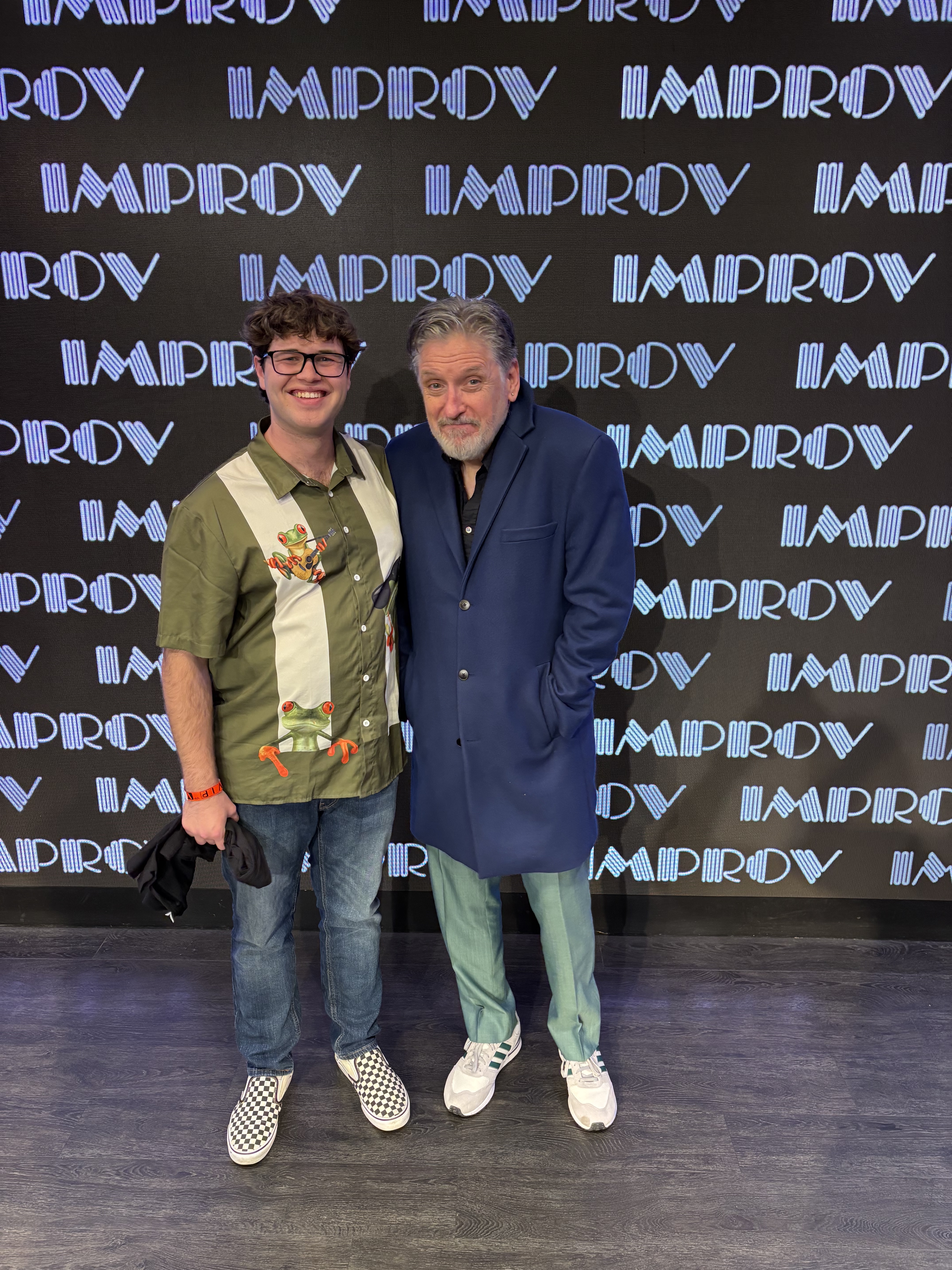
Craig Ferguson announced he would be leaving The Late Late Show in early 2014. His final episode aired December 19, 2014, and featured a closing skit in which Ferguson woke up in bed next to Drew Carey. Reprising his role as Mr. Wick, Ferguson explained to Carey that he had a strange dream in which he was the host of a late-night talk show, and Carey was the host of a game show (referencing Drew Carey’s hosting of The Price is Right). This segment is a reference to the series finale of Newhart, in which Bob Newhart’s character Dick Loudon wakes up as Bob Hartley, his character from his previous show, The Bob Newhart Show. Bob Newhart also appeared on Ferguson’s final show, revealing the true identity of Secretariat. The closing segment also featured a snowglobe depicting Ferguson, Geoff, and Secretariat (a reference to the finale of St. Elsewhere) while Journey’s “Don’t Stop Believing” played (a reference to The Sopranos series finale). Ferguson was replaced by James Corden, who hosted The Late Late Show in 2023. CBS replaced The Late Late Show with After Midnight, hosted by Taylor Tomlinson, until she stepped down in 2025. After the cancellation of The Late Show with Stephen Colbert, CBS now airs reruns of Comics Unleashed during its late-night time slot. Since leaving the show, Ferguson has hosted various game shows and continues to perform stand-up comedy. I was lucky enough to see Ferguson perform in 2025 and even got a picture with him after the show. Craig Ferguson’s show remains one of the most innovative and unusual shows in the history of the genre. Like Letterman, Ferguson is a true comedy deconstructionist, and it is my belief that in the future, people will look back on his time at The Late Late Show and fully recognize his genius and influence.